Product Designer · Lending Workflow Reengineering · TBC Bank
Reengineering a legacy lending platform around clearer, product-specific workflows.
ROLE
Product Designer
DURATION
August 2025 -
Current position
TEAM
Product Designer · Business Owners · Engineers · Product Team · External Vendor
METHODS
User Interviews · Workflow Mapping · Requirements Analysis · Stakeholder Workshops · UX Audits · Prototyping · Design System Patterns · Usability Feedback
Overview
The legacy lending system supported multiple lending products and operational workflows in one shared environment.
CONTEXT
The existing system had grown into a complex, shared environment where different lending products were managed through the same structure. Users often encountered information and actions that were not relevant to their specific task, while some workflows required multiple screens, nested modals, and knowledge of legacy system logic.
The reengineering initiative created an opportunity to rethink these workflows rather than simply reproduce the legacy structure in a new interface.
MY CONTRIBUTION
As the primary product designer, I helped shape how complex lending workflows should work in the platform, aligning user needs, business rules, and technical constraints into clearer, product-specific experiences.
Design
Redesigned complex lending workflows around user tasks rather than legacy system structure.
Reduced product-irrelevant information and created clearer, product-specific experiences.
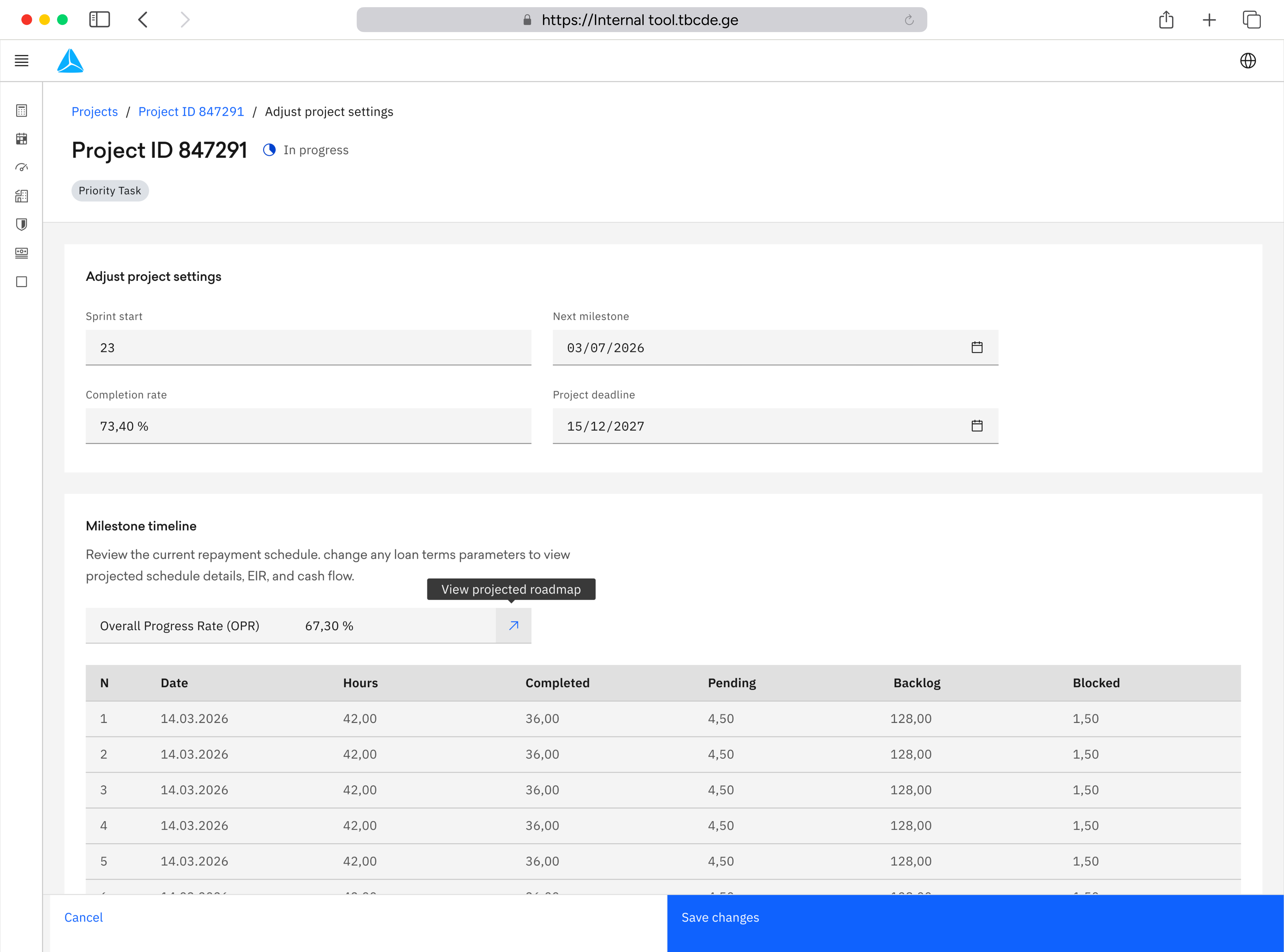
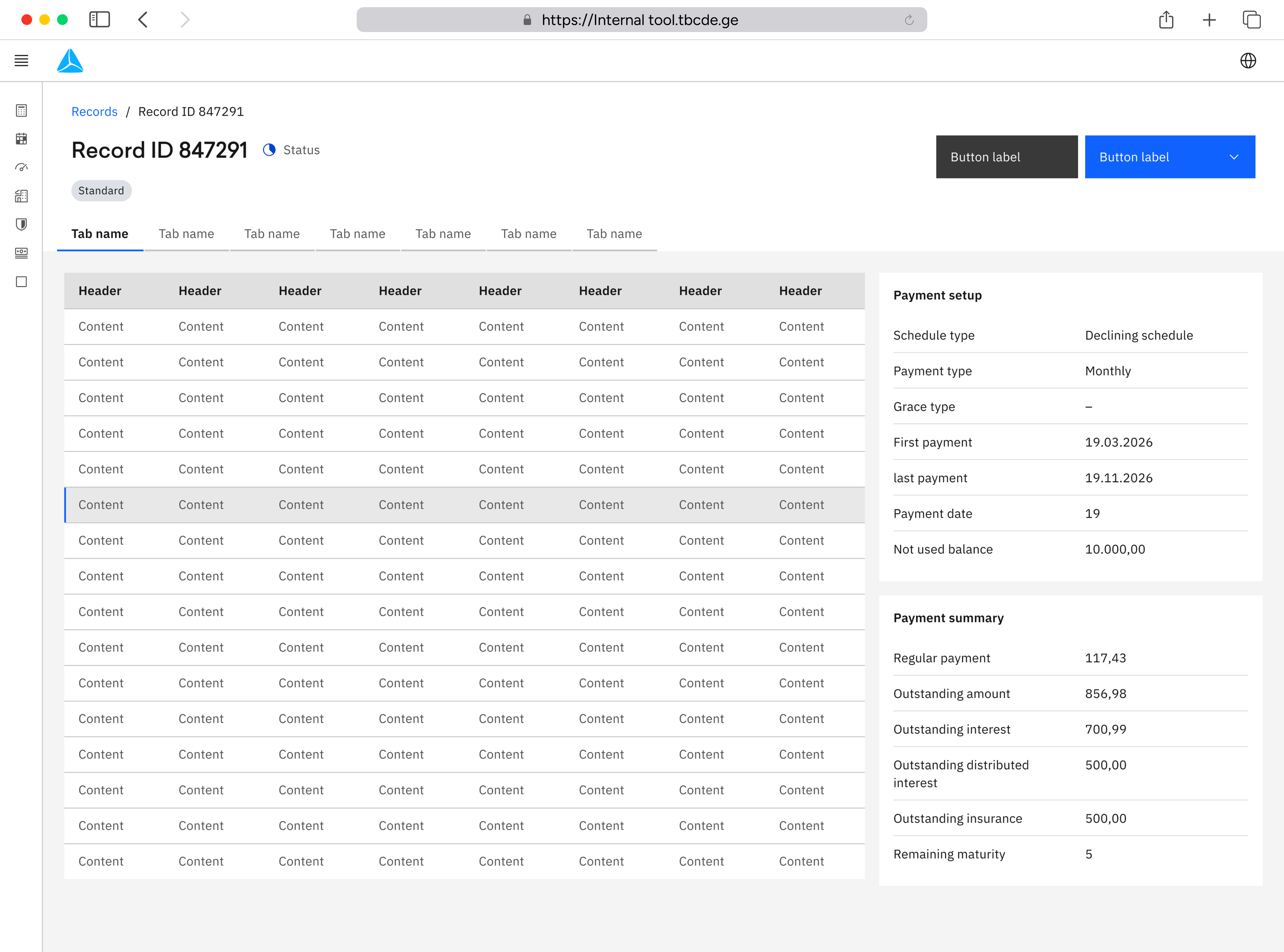
Defined reusable interaction patterns for forms, tables, statuses, validation, and navigation.
Research & Analysis
Reviewed legacy workflows, internal documentation, and legacy system behavior.
Conducted user interviews and feedback sessions to identify pain points, workarounds, and hidden dependencies.
Separated business requirements from inherited technical or historical constraints.
Collaboration
Worked closely with business owners, engineers, users, and the external vendor to clarify requirements and
validate platform behavior.
Used design flows and prototypes to surface edge cases and missing requirements before implementation.
Strategy / Systems thinking
Helped shape how product-specific workflows should work across the platform, rather than treating
each screen as an isolated design task.
IMPACT
Testing showed that the redesigned flows were easier to understand, navigate, and complete.
ON WORKFLOW CLARITY
“Before, I had to remember where everything was and what came next. Here I can understand the flow just by looking at the screen.”
User testing participant 1
ON RELEVANCE
“This is much easier because I only see the information I need for this product. I don’t have to filter out everything else myself.”
User testing participant 2
ON LEARNABILITY
“I could probably complete this without opening the guide. The steps and actions are much clearer now.”
User testing participant 3
ON NAVIGATION
“The old flow made me feel like I was moving between different places all the time. This feels much more connected and easier to follow.”
User testing participant
The challenge
THE LEGACY LENDING SYSTEM
Business
Reduce vendor dependency and give internal teams more control over future changes.
Product
Move from one shared experience toward workflows tailored to specific lending products.
User
Make complex operations easier to understand, learn, and complete.
Research
Where did complexity come from: the business, the legacy lending system, or learned ways of working?
HOW I RAN THE RESEARCH
I combined user interviews, workflow analysis, requirements review, and stakeholder sessions to understand the sources of complexity.
User interviews
Users across lending workflows
Workflow analysis
Legacy workflows, edge cases, task sequences
Requirements review
Business rules and product-specific needs
Stakeholder sessions
Business owners, engineers, external vendor
KEY INSIGHTS THAT SHAPED THE REDESIGN
INSIGHT 01
Users had learned the legacy system
instead of being supported by it.
Routine tasks depended on guides, memorized sequences, and help from colleagues.
DESIGN IMPACT
Clearer hierarchy, stronger feedback, and self-explanatory workflows.
INSIGHT 02
One shared legacy system created
product-irrelevant complexity.
Fields and actions for other lending products added noise to everyday tasks.
DESIGN IMPACT
Product-specific flows showing only relevant information and actions.
INSIGHT 03
Legacy technical logic was visible in the user experience.
Workflows reflected legacy system structure rather than how users approached a task.
DESIGN IMPACT
Flows organized around user tasks and business intent.
Problem
WHAT THEY SAID
“I know how to do it because someone showed me, not because the system makes it clear.”
Legacy lending system user during testing / interview
The legacy system had become something users learned to navigate, rather than something that guided them through their work.
WHAT IT MEANT
The legacy system had become something users learned to navigate, rather than something that guided them through their work.
THE JOB TO BE DONE
When I’m completing a lending operation, I want to see only what is relevant, understand what happens next, and finish the task without relying on external instructions.
DESIGN TENSION
Make complex lending workflows easier to understand without losing the business logic behind them.
Strategy
What should stay complex and what should become simpler?
HOW I SHAPED THE APPROACH
I separated business-critical complexity from legacy interaction complexity before redesigning the workflows.
The ask
Reengineer key workflows into clearer, product-specific experiences.
The assumption
That the legacy lending system’s flows and screens reflected what the business actually needed.
What I checked first
Which parts were genuine business rules, and which were inherited from the legacy system.
The design direction
Preserve the business logic, remove unnecessary interaction complexity, and organize the experience around the user’s task.
01 Discover
Design
I approached the redesign as a workflow problem, focusing on clearer structure, more coherent workflows, and reusable patterns that could scale across the reengineered lending platform.
01 / 03
Simplifying legacy lending system complexity
MY IMPACT
Established a clearer interaction model across the reengineered lending platform by simplifying navigation, reducing irrelevant inputs and nested flows, and creating reusable patterns for complex lending tasks.
LEGACY SYSTEM
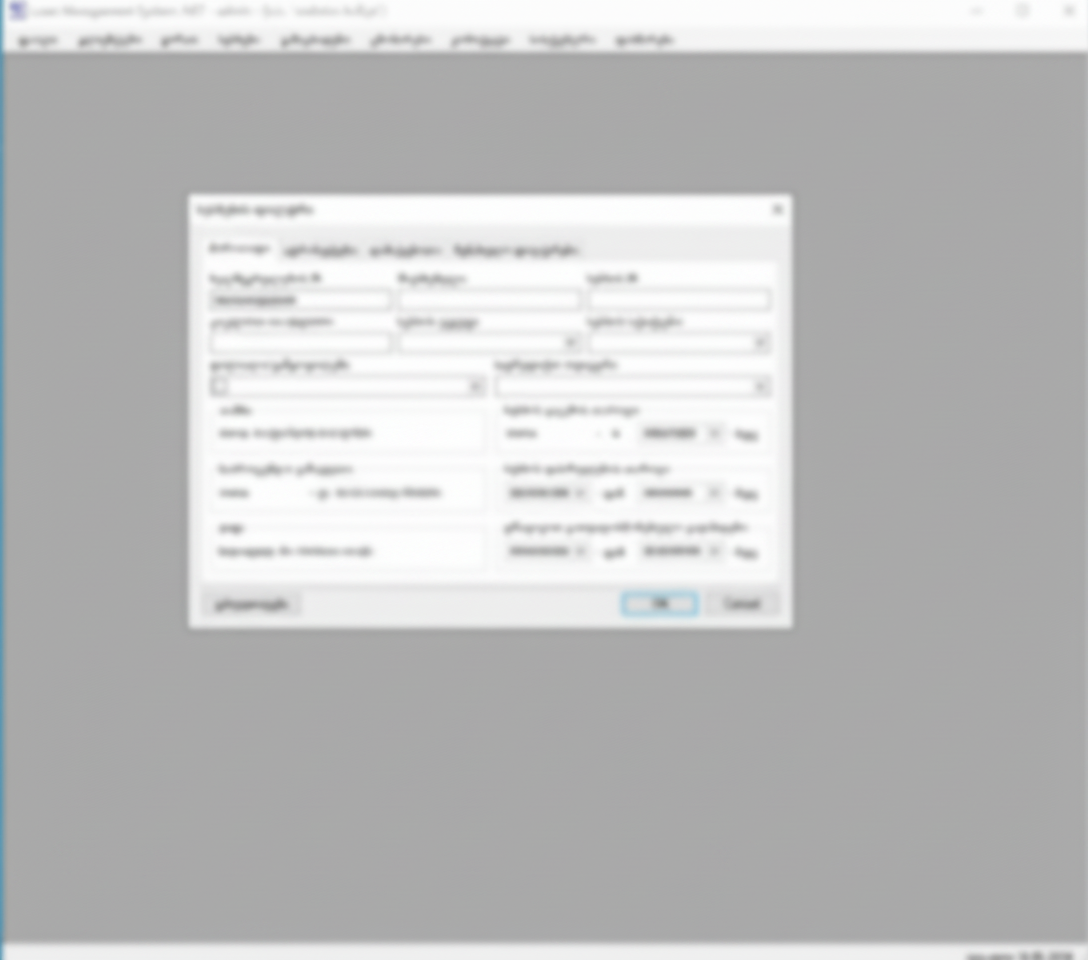
01. Search parameters
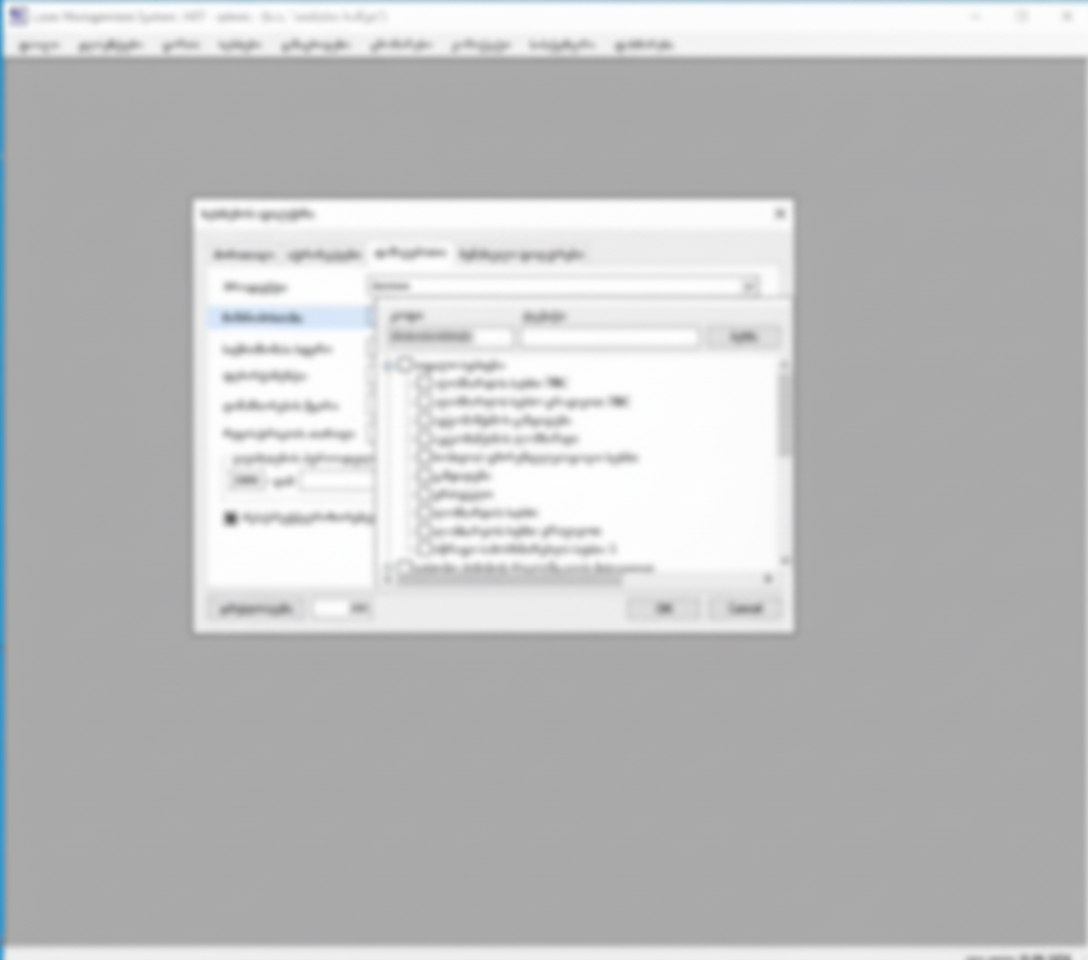
02. Refine the search
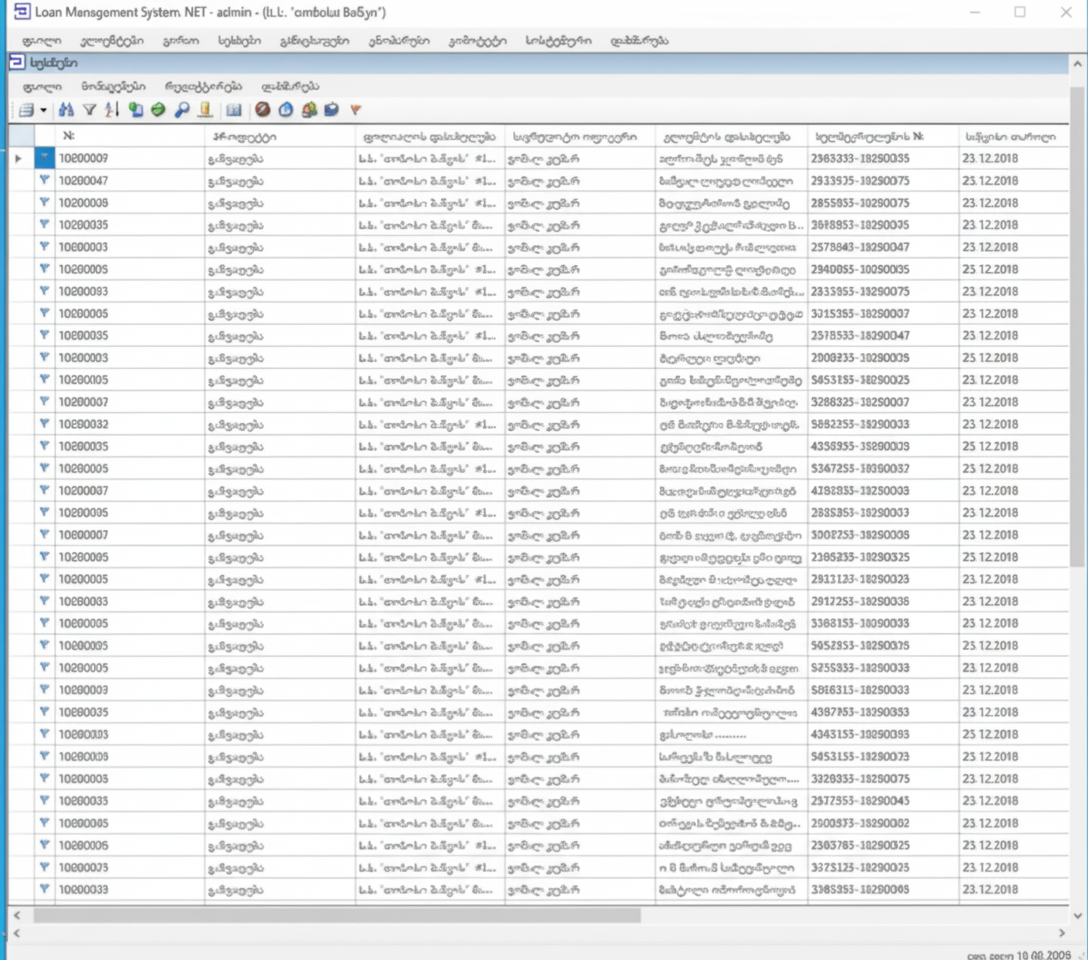
03. Review results
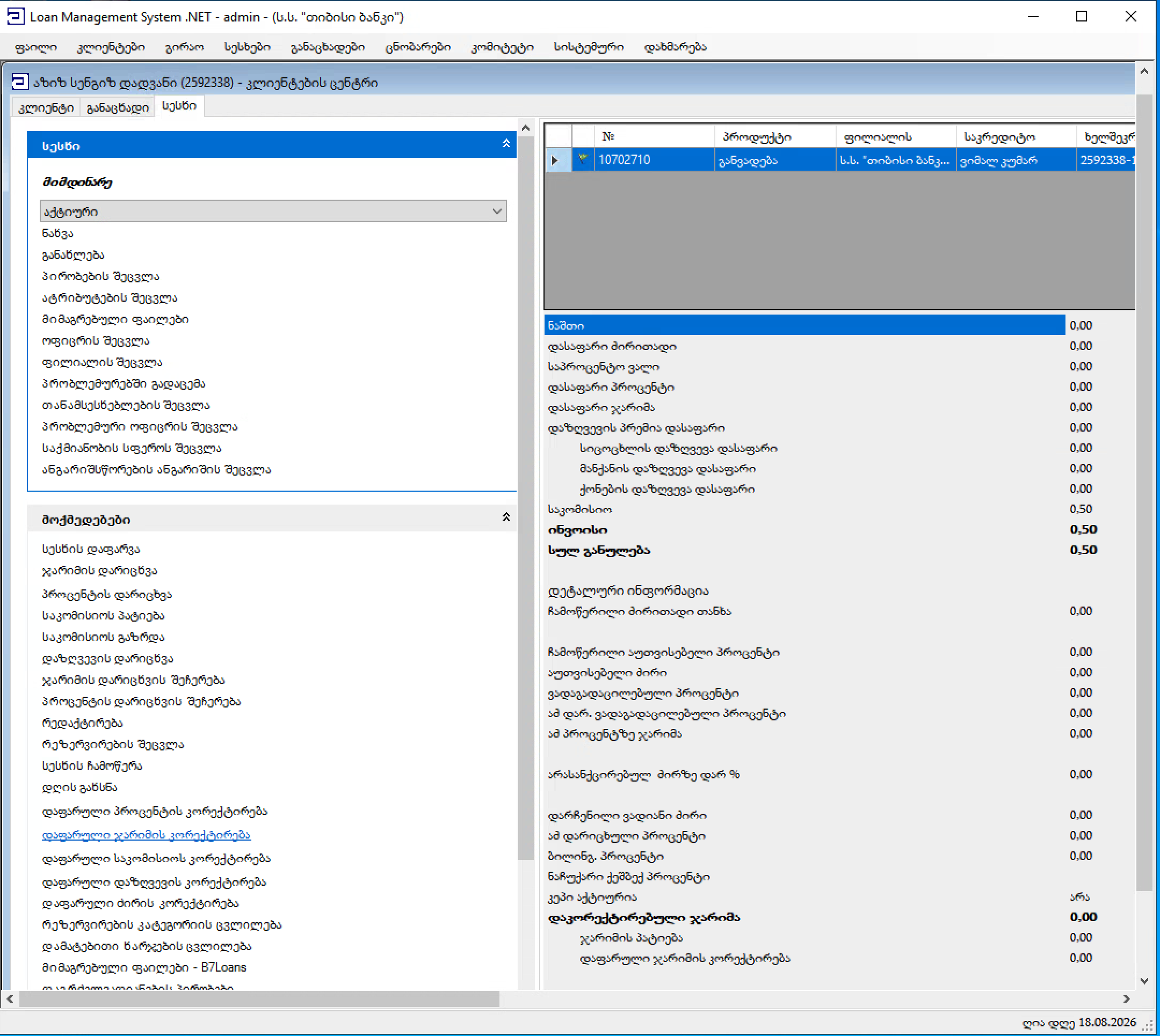
04. Open the loan
Legacy system blurred to protect internal details.
ACCUMULATED COMPLEXITY
Over time, workflows became deeper and more fragmented as new functionality was layered onto legacy patterns instead of being reorganized around current user needs.
Fragmented information architecture
Users had to remember where functionality was located because the legacy system reflected historical implementation decisions more than a consistent task-based structure.
Low contextual relevance
Shared forms, search criteria, and configuration options often surfaced information that was irrelevant to the current product, role, or workflow.
Design response
I treated these as recurring workflow patterns rather than isolated screen problems. This meant restructuring workflows around user intent, reducing unnecessary exposure, and introducing reusable interaction patterns for complex lending workflows across the platform.
PLATFORM
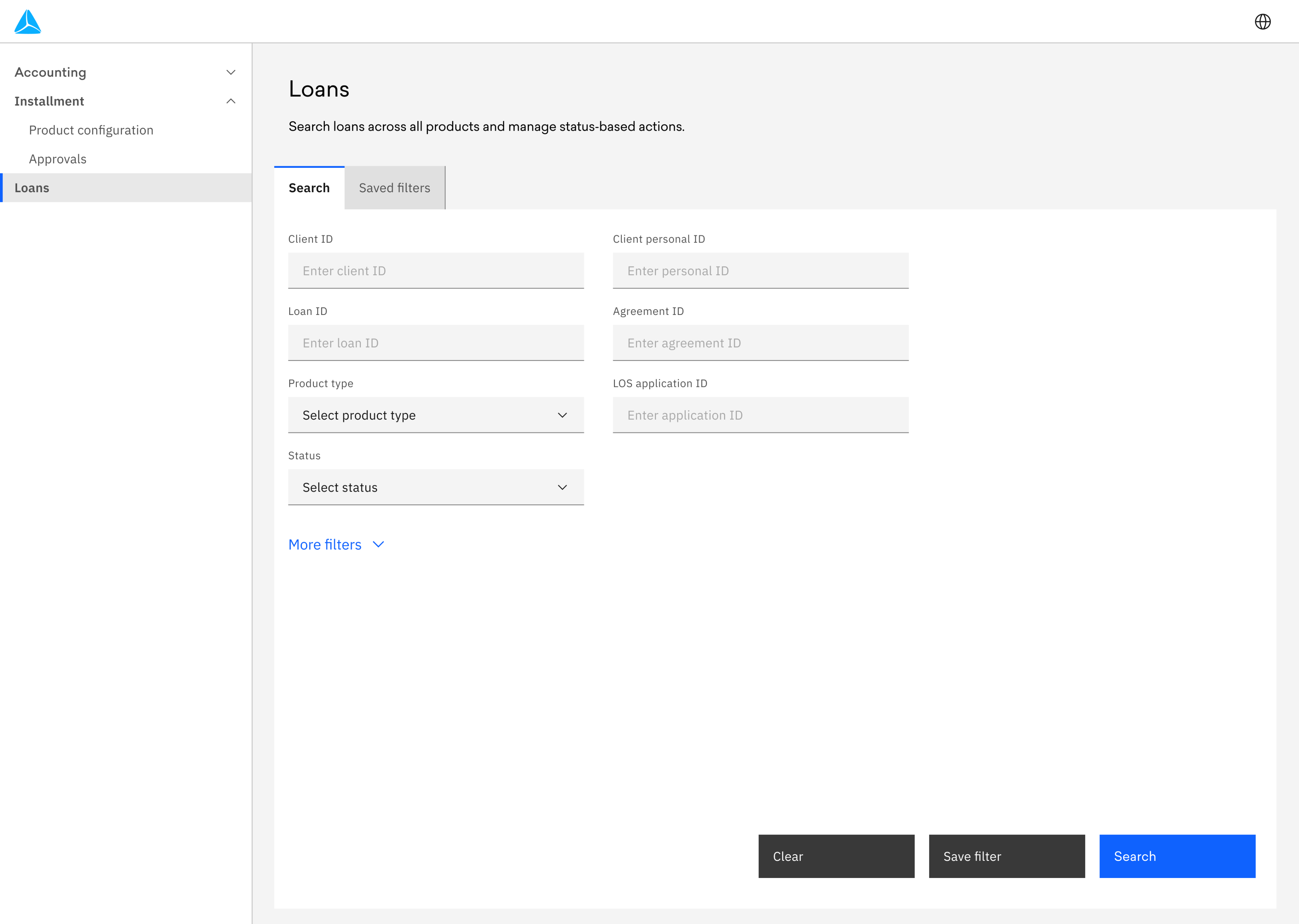
01. Prioritized search
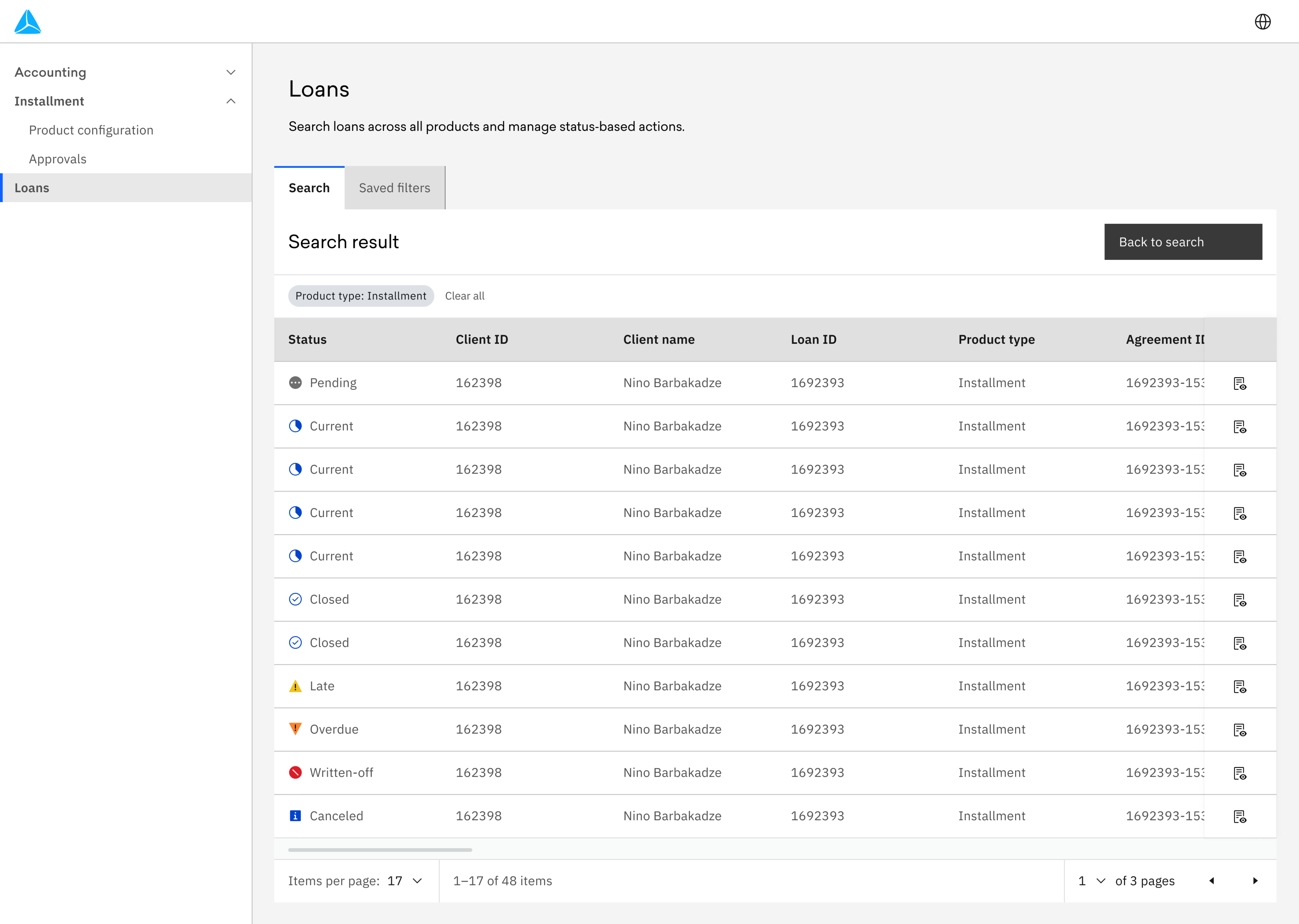
02. Scannable results
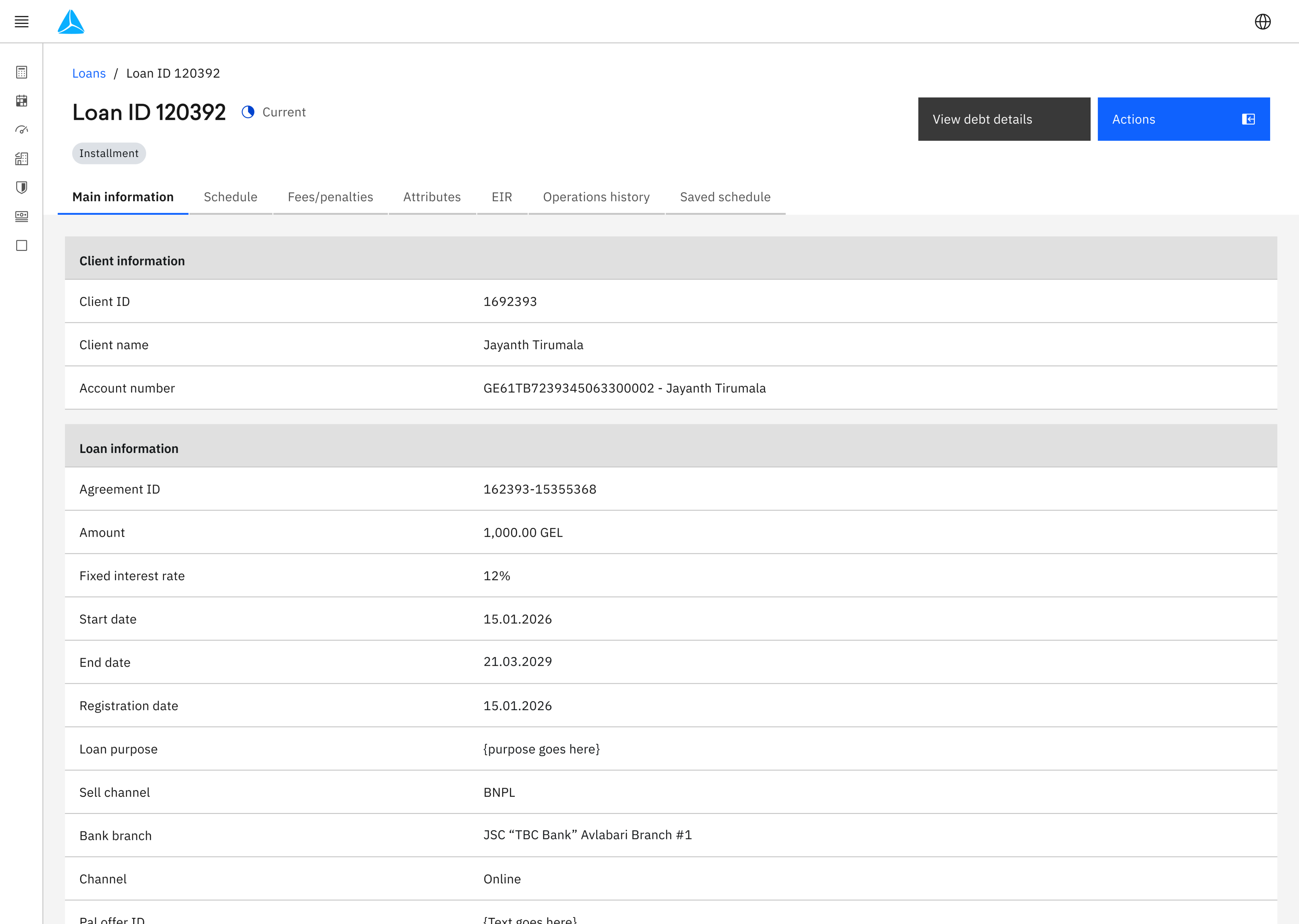
03. Clear loan context
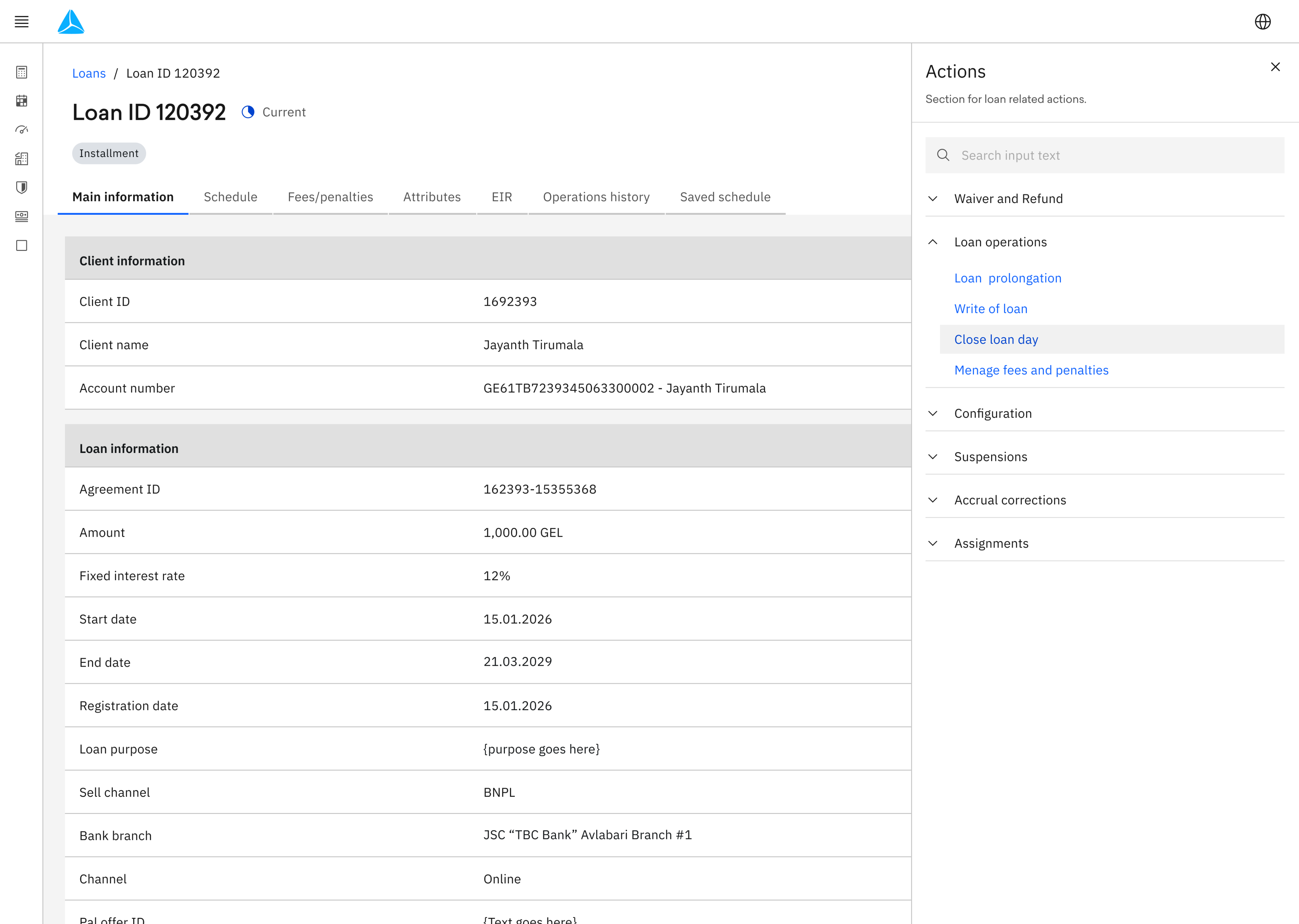
04. Contextual actions
Platform blurred to protect internal details.
01. Prioritized search
The most frequently used criteria stay visible, while secondary filters are progressively disclosed when needed. This keeps the entry point focused without removing flexibility.
02. Scannable results
Key status and product information remain visible in the results, helping users identify the right loan faster without opening multiple records.
03. Clear loan context
Once a loan is selected, the experience shifts into a dedicated workspace where information, history, and relevant details stay connected to that specific loan.
04. Contextual actions
Available operations are grouped in a dedicated side panel, keeping the main screen focused while making actions easier to browse and search.
Design shifted
The redesign moved users from navigating the legacy system’s structure to working directly within the context of the task.
02 / 03
Designing around the real workflow
MY IMPACT
Designed around how users actually complete work, connecting related steps and improving feedback, errors, empty states, and field behavior so the reengineered lending platform was easier to understand and act on.
What happens when technical logic and user workflow don’t match?
What I noticed
Related operations were sometimes defined as separate technical processes, even when users experienced them as one continuous task.
What I challenged
The assumption that technical separation should also become interaction separation.
What I changed
I connected related steps into clearer end-to-end workflows while preserving the business rules and approval logic behind them.
The design direction
Make the experience follow the user’s task, while keeping technical complexity behind the interface.
Guidance inside the flow
Connected steps
Related operations feel like one task.
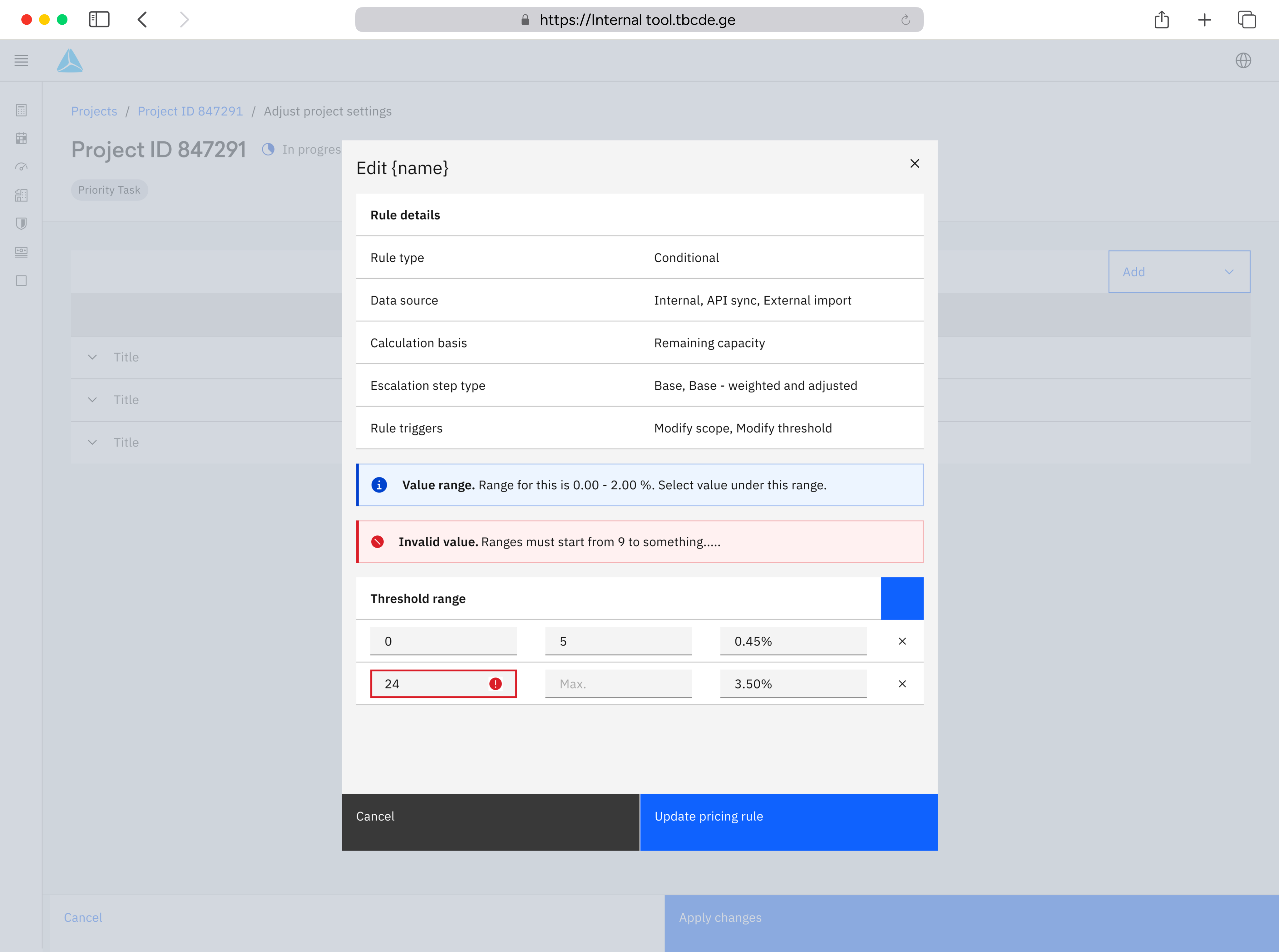
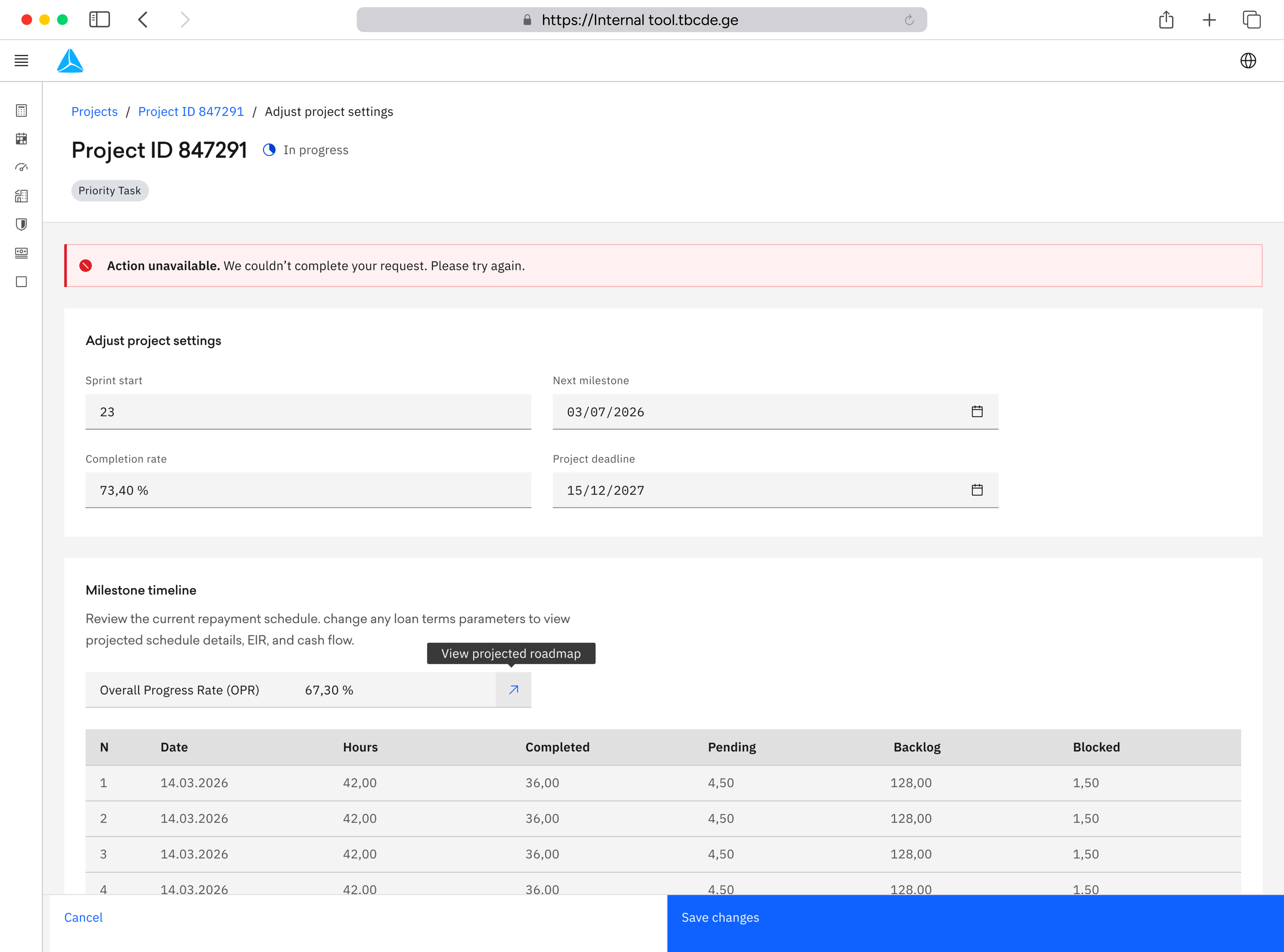
Clear validation
Errors explain what happened and how to recover.
Useful empty states
Users understand why nothing is shown and what to do next.
Clear field states
Editable, read-only, and disabled elements are visually distinct.
03 / 03
Building reusable interaction patterns
MY IMPACT
These reusable patterns created a consistent foundation for future workflows across other internal tools.
Data table patterns
Validation / field states
Early impact
While the reengineered lending platform is still in development, early testing and implementation feedback show improvements in workflow clarity, consistency, and requirement alignment.
Clearer workflows
Users can move through key tasks with less unnecessary navigation and stronger context around what happens next.
More consistent interactions
Reusable patterns for tables, validation, states, and actions make the platform more predictable across workflows.
Earlier requirement clarity
Design discussions helped surface missing cases and workflow gaps before implementation.
EARLY FEEDBACK · TAKEAWAYS
The flow is easier to follow, with relevant information visible in the context of the task.
USER PERSPECTIVE · Testing takeaway
Mapping the workflow end to end helped surface gaps and clarify requirements before development.
BUSINESS PERSPECTIVE · Feedback takeaway
Current status
The project is still evolving. As more workflows move into the platform, the interaction patterns continue to be refined through testing and implementation feedback.
As the project evolved, my role expanded from designing individual screens to helping define how lending workflows should work across the reengineered lending platform.
Aligning user needs, business rules, and technical constraints.